
How Does Secure Data Destruction Work? A Guide for UAE Businesses
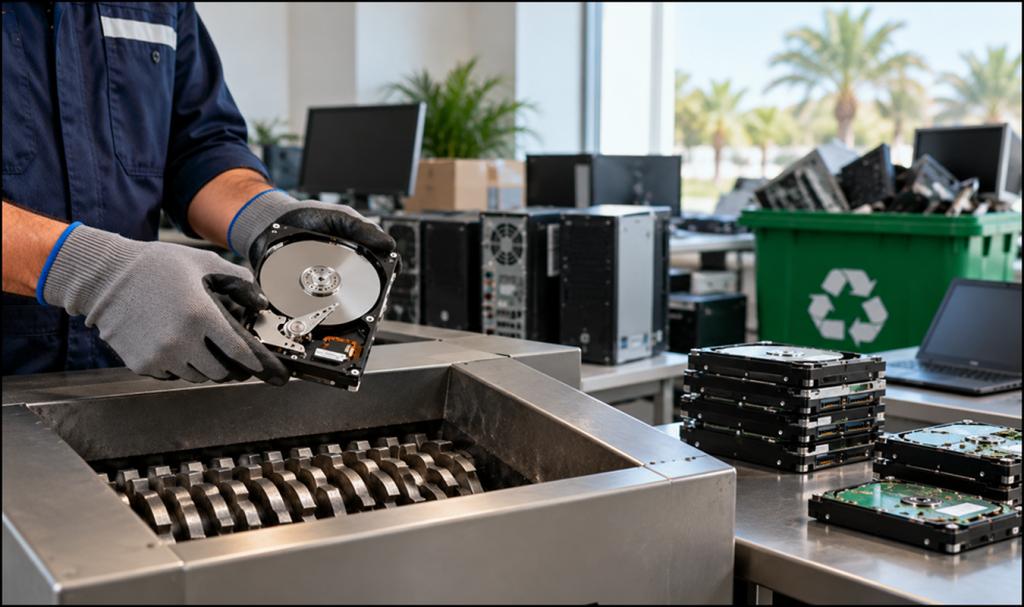
Every business handles information that needs to remain confidential. Customer records, employee details, financial reports, business emails, and internal documents are often stored on computers, laptops, servers, and other electronic devices. But what happens to this information when the equipment becomes outdated or is no longer needed?
Simply deleting files or formatting a storage device may not permanently remove all the information it contains. If the equipment is sold, reused, or sent for recycling without proper preparation, sensitive data could remain accessible.
This is why secure data destruction is an important part of IT asset management. It helps businesses ensure that confidential information cannot be recovered from storage devices when they are retired.
For businesses in the UAE, understanding the data destruction process can help improve information security, support responsible electronic waste disposal, and reduce risks associated with outdated IT equipment.
In this guide, we explain how secure data destruction works, which methods are available, when businesses should use them, and what to consider before choosing a data destruction service.
What is Secure Data Destruction?
Secure data destruction is the process of making information stored on electronic devices unrecoverable through an appropriate sanitisation or physical destruction method.
When businesses use computers and digital storage devices, information may remain on those devices even after files have been deleted or the equipment has stopped working.
For example, an old office computer may contain financial spreadsheets, customer contact details, saved credentials, or confidential company documents. If the storage device is not handled correctly, some of this information may be recoverable.
Secure data destruction aims to prevent unauthorised access to such information before a device is reused, transferred, sold, or disposed of.
The method selected depends on several factors, including the type of storage technology, the sensitivity of the information, the condition of the device, and whether the equipment will be used again.
Why is Secure Data Destruction Important for UAE Businesses?
Businesses across the UAE regularly upgrade their IT infrastructure to improve efficiency, support growth, and replace ageing equipment. However, retiring old devices without a proper data destruction process can create avoidable security and operational risks.
Here are some important reasons to take secure data destruction seriously.
Protect Confidential Business Information
Electronic devices can store sensitive information long after employees have stopped using them.
If old computers or storage devices are transferred to another party without appropriate sanitisation, confidential records may remain accessible.
Secure data destruction helps businesses reduce this risk before equipment leaves their control.
Reduce the Risk of Data Exposure
Improperly discarded devices can become a potential source of information exposure. Depending on the data involved, this may lead to financial losses, reputational damage, customer concerns, or contractual issues.
A documented destruction process helps organisations manage retired devices more carefully and reduces the chances of sensitive information being overlooked.
Support Data Protection Responsibilities
Businesses should understand the privacy, contractual, and information security requirements that apply to the information they collect and process.
In the UAE, the Personal Data Protection Law may be relevant to organisations within its scope, subject to applicable exclusions and other legal provisions. Sector-specific requirements and contractual obligations may also apply.
Secure data destruction can support a wider data protection programme, but it does not replace other responsibilities, such as appropriate data retention, access control, and incident management.
Improve IT Asset Management
When an organisation replaces dozens or hundreds of computers, tracking every device can become difficult without a clear process.
A structured approach helps businesses maintain an inventory, identify storage devices, record processing results, and confirm how equipment has been handled.
This is especially useful during office relocations, company expansions, infrastructure upgrades, and business closures.
Support Responsible Electronic Waste Disposal
Secure data destruction and electronic waste disposal address two different but connected responsibilities.
Data destruction protects the information stored on a device, while electronic waste disposal focuses on the responsible handling of unwanted equipment.
Combining both activities helps businesses prepare retired equipment for appropriate reuse, refurbishment, or recycling without overlooking data security.
How Does the Secure Data Destruction Process Work?
Secure data destruction is more than deleting files. It involves identifying the equipment, selecting a suitable method, completing the process, and confirming the outcome.
Although the exact procedure varies between organisations and service providers, the following steps provide a practical overview.
Step 1: Identify and Inventory the Devices
The first step is to identify which devices are scheduled for retirement or disposal.
These may include:
- Desktop computers and laptops
- Internal and external hard drives
- Solid-state drives (SSDs)
- Servers and storage systems
- USB drives and other removable media
- Other electronic devices that store business information
Businesses should record relevant asset details, such as device type, asset number, and storage media information.
An accurate inventory helps ensure that no device is accidentally missed during the process.
Step 2: Assess the Information Security Requirements
Before choosing a destruction method, determine the type of information stored on the device and the level of protection required.
A device containing publicly available documents may present a different risk from one containing confidential financial records or sensitive personal information.
Businesses should also check their data retention policies. Information that must be retained for legal, operational, or contractual reasons should be handled appropriately before the storage device is sanitised or destroyed.
Step 3: Choose the Appropriate Data Destruction Method
Different storage technologies require different approaches.
A working storage device intended for reuse may be suitable for secure data sanitisation. A damaged device that cannot be sanitised reliably may require physical destruction.
The method should be selected according to the storage technology, the security requirements, and the intended destination of the equipment.
Step 4: Carry Out Data Sanitisation or Physical Destruction
Once the appropriate method has been selected, the device is processed using the chosen procedure.
For eligible storage devices, secure sanitisation may remove the ability to recover previously stored information. Where physical destruction is necessary, the storage medium is destroyed using an appropriate process.
The method must be suitable for the particular device. For example, an SSD may require a different sanitisation approach from a traditional hard disk drive.
Step 5: Verify the Results
Completing a procedure does not automatically mean that every device has been processed successfully.
Verification helps confirm that the required sanitisation or destruction outcome has been achieved. The checks used will depend on the method, the storage technology, and the required level of assurance.
If a device cannot be processed successfully, it should be handled through an appropriate alternative procedure rather than being released for reuse or disposal without further assessment.
Step 6: Maintain Records and Documentation
Documentation provides a record of what happened to each device.
Depending on the process and service selected, records may include:
- An inventory of the devices processed
- Storage device identification details
- The data destruction method used
- Completion and verification status
- A certificate of destruction, where provided
Businesses should confirm what documentation is available and whether it covers individual devices or an entire batch.
Step 7: Arrange Reuse or Responsible Recycling
After data security requirements have been met, the remaining equipment can be assessed for reuse, refurbishment, component recovery, or recycling.
Functional equipment may be suitable for reuse if it meets the relevant requirements. Equipment that cannot be reused should be directed through appropriate electronic waste management channels.
This final step helps businesses manage both information security and the responsible handling of retired IT assets.
What are the main Methods of Secure Data Destruction?
There are several ways to make stored information unrecoverable. The most appropriate method depends on the device, its condition, and the level of security required.
1. Secure Data Wiping
Secure data wiping uses an appropriate sanitisation technique to make stored information unrecoverable.
Depending on the device, this may involve overwriting data or using a supported sanitisation function.
When is it suitable?
It may be suitable for functional storage devices that are intended for reuse or refurbishment.
What should businesses know?
Ordinary file deletion and standard formatting should not automatically be treated as secure data destruction. The sanitisation method should be suitable for the storage technology, and the outcome should be verified.
2. Cryptographic Erasure
Some storage devices use encryption to protect information. Where the encryption implementation and device support it, cryptographic erasure can make encrypted data inaccessible by securely sanitising the relevant encryption keys.
This method may be useful in certain managed storage environments.
What should businesses know?
The organisation must have confidence in the encryption implementation and the sanitisation procedure. Simply deleting a password or removing a user account does not achieve the same result.
3. Physical Destruction
Physical destruction involves damaging the storage medium so it cannot be used in its original form to retrieve stored information.
Specialised processes may include shredding or other appropriate destruction techniques.
When is it suitable?
It may be suitable for damaged storage devices, media that cannot be sanitised reliably, or situations where reuse is not permitted.
What should businesses know?
Destroying the computer’s outer casing does not necessarily destroy the data stored on its hard drive or SSD. The storage medium itself must be addressed.
4. Degaussing for Suitable Magnetic Media
Degaussing uses a strong magnetic field to disrupt the magnetic information stored on compatible magnetic media.
It may be suitable for certain magnetic storage devices, depending on the equipment and required security level.
However, degaussing is not suitable for SSDs because they do not store data magnetically in the same way as traditional magnetic hard drives.
Businesses should therefore confirm the storage technology before selecting this method.
Secure Data Destruction vs Ordinary File Deletion
One common misconception is that deleting files or formatting a computer completely removes its data.
In reality, ordinary deletion often removes file references rather than reliably sanitising the underlying storage. Depending on the device and method used, some information may remain recoverable.
Method | How it works | Suitable for sensitive information? |
File deletion | Removes files from ordinary access | Not sufficient on its own |
Standard formatting | Prepares a storage device for use and may remove file references | Not necessarily |
Secure data sanitisation | Uses a suitable process to make stored data unrecoverable | Yes, when appropriately selected and verified |
Physical destruction | Destroys the storage medium | Yes, when the destruction method meets the required standard |
For sensitive business information, the important question is not whether files are visible on the screen. It is whether the information can be recovered using methods relevant to the device and the required level of assurance.
What are the Benefits of Secure Data Destruction?
A properly managed data destruction process can provide several benefits to businesses.
Improved information security: Helps prevent unauthorised access to data remaining on retired devices.
Reduced disposal risks: Ensures that storage devices are addressed before equipment leaves the organisation’s control.
Better asset tracking: Creates a clearer record of devices scheduled for disposal and how they were processed.
Support for audits: Appropriate documentation can help businesses demonstrate that their equipment disposal procedures were followed.
More responsible equipment reuse: Secure sanitisation can allow eligible devices to be reused instead of being destroyed unnecessarily.
Better electronic waste management: Integrates data protection into the wider process of IT scrap disposal and recycling.
These benefits depend on selecting suitable methods, implementing the process correctly, and maintaining appropriate oversight.
Common Mistakes Businesses Should Avoid
Even a well-established organisation can overlook important details when disposing of IT equipment.
Assuming That Deleting Files Is Enough
Deleting files or emptying the recycle bin does not guarantee that information has been securely removed.
Better practice: Use an appropriate data sanitisation method and verify the result.
Ignoring Damaged Storage Devices
A computer that no longer powers on may still contain a working storage device.
Better practice: Include damaged computers in the inventory and assess their storage devices before disposal.
Overlooking Secondary Storage
Some computers contain multiple drives or additional storage media.
Better practice: Identify all relevant storage devices and ensure each one is included in the process.
Failing to Keep Records
Without documentation, it can be difficult to determine whether all devices were processed correctly.
Better practice: Maintain an asset inventory and retain relevant verification and destruction records.
Sending Equipment Directly for Recycling
Electronic waste recycling does not automatically guarantee that confidential information has been destroyed.
Better practice: Confirm that data security requirements have been met before the equipment enters a reuse or recycling channel.
How is Secure Data Destruction Connected to IT Scrap Disposal Recycling?
IT scrap disposal recycling focuses on managing unwanted IT equipment through collection, assessment, reuse, refurbishment, dismantling, and material recovery.
Secure data destruction addresses the information stored on that equipment.
For example, a business replacing its office computers may need to sanitise the storage devices before the computers can be refurbished or sent for recycling.
Combining both processes helps organisations:
- Protect confidential information before equipment is transferred.
- Maintain records of retired IT assets.
- Identify equipment suitable for reuse.
- Direct unsuitable equipment to appropriate recycling channels.
- Reduce the risk of storage devices being overlooked during disposal.
Businesses should confirm the actual handling and recycling arrangements offered by their chosen service provider.
How Can UAE Businesses Choose a Secure Data Destruction Provider?
Selecting a service provider requires careful consideration of the technical process and the handling arrangements.
Before arranging a service, businesses should ask the following questions.
Which Data Destruction Methods Are Available?
Check whether the provider can explain the methods available for HDDs, SSDs, damaged drives, and other storage media.
How is Equipment Tracked?
Ask how devices are recorded during collection, transportation, storage, and processing.
How Are Results Verified?
Find out what checks are performed to confirm that sanitisation or physical destruction has been completed successfully.
What Documentation Is Provided?
Ask whether the service includes processing records, asset-level tracking, or a certificate of destruction. Confirm what each document demonstrates.
What Happens to the Equipment Afterwards?
Understand whether equipment is assessed for reuse, refurbishment, or recycling, and how the process is managed after data destruction.
Does the Service Meet Your Requirements?
Confirm service coverage, costs, collection arrangements, and whether the provider’s procedures meet your organisation’s applicable security and contractual requirements.
Businesses should evaluate providers based on clear procedures and verifiable information rather than relying only on broad claims about security or environmental responsibility.
Secure Data Destruction and Electronic Waste Disposal in the UAE
Electronic waste disposal is another important consideration when businesses retire computers and other electronic equipment.
Desktop computers, laptops, servers, and storage devices contain a combination of materials that may be suitable for recovery, reuse, or specialised recycling. However, inappropriate disposal can create environmental risks and waste valuable resources.
A responsible process should address data security before equipment is transferred and then direct the remaining hardware to an appropriate destination.
Businesses can support this approach by extending equipment life where practical, using appropriate disposal channels, maintaining asset records, and confirming how retired equipment will be handled.
For organisations in Abu Dhabi and elsewhere in the UAE, integrating data destruction into an IT asset disposal policy helps ensure that information security and electronic waste management are considered together.
Frequently Asked Questions
How long does secure data destruction take?
The time required depends on the number of devices, the storage technology, the method selected, and the verification requirements. Businesses should confirm the expected processing time with their chosen service provider.
Is secure data destruction necessary for non-working computers?
Yes. A non-working computer may still contain a readable storage device. The device should be assessed and processed securely before disposal.
Can data be recovered after secure data destruction?
A properly selected and successfully completed sanitisation or destruction process is intended to make the information unrecoverable under the applicable requirements. The level of assurance depends on the method, the device, and the verification performed.
Is physical destruction always better than data wiping?
No. Physical destruction prevents reuse of the destroyed storage medium, while appropriate data sanitisation may allow a functional device to be reused. The right choice depends on the security requirements and the intended use of the equipment.
What is the difference between data destruction and data backup?
A backup creates a separate copy of information for recovery or continued use. Data destruction makes information on a particular storage device unrecoverable. Businesses should verify any required backups and retention obligations before destroying data.
Conclusion
Secure data destruction is an important part of managing outdated computers and electronic equipment. Deleting files or formatting a storage device may not provide sufficient assurance that confidential information has been permanently removed.
By identifying storage devices, selecting an appropriate sanitisation or destruction method, verifying the results, and maintaining accurate records, businesses can manage retired IT assets more confidently.
For UAE organisations, combining secure data destruction with responsible IT scrap disposal recycling and electronic waste disposal supports a more organised approach to information security and equipment management.
Before disposing of old computers, review your data protection requirements and confirm how each device will be handled.
To learn more about the available services, visit IT Scrap Buyers or explore its Desktop Data Destruction Service page.
Secure your data before disposal. Make informed decisions about old IT equipment. Manage electronic waste responsibly.
Why Sewer Systems Require Regular Maintenance
Sewer networks operate continuously behind the scenes, transporting wastewater away from homes, businesses, and public facilities. Over time, grease, sludge, debris, sand, and other materials accumulate inside pipes and drainage channels.
Without routine maintenance, these deposits can cause:
- Slow drainage
- Recurring blockages
- Sewage backups
- Foul odors
- Overflowing manholes
- Pipe damage
- Environmental contamination
Professional sewer cleaning service solutions help prevent these issues by keeping wastewater systems clean and fully operational.
Common Problems Preventive Maintenance Helps Avoid
1. Frequent Sewer Blockages
One of the most common drainage issues is blockage buildup inside sewer pipes. Materials such as grease, food waste, wipes, paper products, and sediment gradually reduce pipe capacity.
Regular sewer cleaning services in Dubai remove these obstructions before they cause complete blockages.
2. Costly Emergency Repairs
Emergency repairs often cost significantly more than scheduled maintenance. A single sewer failure can result in excavation costs, property damage, business interruptions, and sanitation concerns.
Preventive maintenance helps identify weak points before major failures occur.
3. Sewage Backup Incidents
Sewage backups create serious health and safety risks. Contaminated wastewater can damage property, affect occupants, and require extensive cleanup.
Professional emergency sewage backup cleaning services in Dubai can resolve emergencies, but regular maintenance helps prevent them from occurring in the first place.
4. Manhole Overflows
Blocked sewer systems often lead to overflowing manholes that can affect roads, walkways, and surrounding infrastructure.
Routine manhole cleaning ensures wastewater flows properly and minimises overflow risks.
The Financial Benefits of Preventive Sewer Maintenance
Many property owners view maintenance as an expense. In reality, preventive maintenance is an investment that helps reduce operational costs.
Lower Repair Costs
Minor issues are easier and less expensive to fix than major infrastructure failures.
Reduced Downtime
Businesses can avoid disruptions caused by sewer emergencies.
Longer Equipment Life
Regular maintenance protects pipes, pumps, septic tanks, and related infrastructure.
Improved Operational Efficiency
Clean sewer networks perform more efficiently and require fewer emergency interventions.
Modern Solutions for Maintaining Sewer Systems
Sewer Jetting Services Dubai
High-pressure water jetting is one of the most effective cleaning methods available today.
- Grease buildup
- Sludge deposits
- Sediment accumulation
- Organic waste
- Stubborn blockages
This technology thoroughly cleans pipelines without causing damage.
CCTV Sewer Inspections
Advanced camera inspections allow technicians to identify hidden problems within sewer networks.
Benefits include:
- Accurate diagnosis
- Faster maintenance planning
- Reduced repair costs
- Early issue detection
Vacuum Tanker Services
Vacuum systems are commonly used for:
- Septic tank cleaning
- Sludge removal
- Manhole cleaning
- Industrial waste collection
These services support effective wastewater management while maintaining environmental safety.
Infrastructure Cleaning in Dubai: Supporting Growing Urban Development
As Dubai continues to expand, drainage and wastewater systems face increasing demand. Municipal networks, commercial properties, industrial facilities, and residential communities all depend on reliable infrastructure.
Professional infrastructure cleaning in Dubai helps maintain:
- Sewer pipelines
- Stormwater drainage systems
- Pumping stations
- Utility networks
- Underground infrastructure
Routine cleaning improves performance while reducing the likelihood of service disruptions.
Effective Sanitary Sewer Network Maintenance in the UAE
The importance of effective sanitary sewer network maintenance in the UAE extends beyond individual properties. Proper maintenance protects public health, environmental quality, and critical infrastructure.
A comprehensive maintenance strategy typically includes:
Sewer Line Cleaning
Regular cleaning removes deposits that restrict flow.
Septic Tank Maintenance
Scheduled septic tank cleaning Dubai services prevent overflow and system failure.
Manhole Inspections
Routine inspections help identify structural issues and blockages.
Emergency Preparedness
Prepared response teams ensure rapid action during unexpected sewer emergencies.
Environmental Protection
Maintenance programs help reduce contamination risks and support regulatory compliance.
Industries That Benefit Most from Preventive Sewer Maintenance
Regular maintenance is essential across multiple sectors, including:
Hotels and Hospitality Facilities
Hotels depend on efficient wastewater systems to provide a positive guest experience.
Restaurants and Food Establishments
Food-service operations generate grease and waste that can quickly cause sewer blockages.
Healthcare Facilities
Hospitals and clinics require reliable drainage systems to maintain hygiene standards.
Educational Institutions
Schools and universities benefit from uninterrupted wastewater management services.
Industrial Facilities
Manufacturing operations often generate large volumes of wastewater that require ongoing maintenance.
Residential Communities
Routine maintenance helps residential properties avoid drainage disruptions and emergency repairs.
Why Choose Ahlam Al Nqaa for Sewer Maintenance Services?
Ahlam Al Nqaa provides comprehensive wastewater management and drainage maintenance solutions across Dubai.
Key Benefits of Choosing Ahlam Al Nqaa
- Experienced wastewater management professionals
- Advanced cleaning and inspection equipment
- Fast emergency response services
- Customised maintenance programs
- Comprehensive sewer cleaning solutions
- Environmentally responsible practices
- Reliable customer support
From Sewer cleaning services Dubai to septic tank cleaning Dubai, the company delivers dependable solutions designed to keep wastewater systems operating efficiently.
Warning Signs Your Sewer System Needs Immediate Attention
Schedule a professional inspection and cleaning if you notice:
- Multiple clogged drains
- Persistent unpleasant odours
- Gurgling sounds from pipes
- Slow drainage throughout the property
- Water is pooling around the drains
- Frequent toilet backups
- Overflowing manholes
Addressing these warning signs early can prevent extensive damage and costly repairs.
Conclusion
Preventive maintenance is one of the most effective ways to keep sewer systems efficient, safe, and problem-free. Regular inspections, cleaning, and servicing help prevent blockages, reduce repair costs, extend infrastructure lifespan, and protect public health.
Whether you need sewer jetting services in Dubai, manhole cleaning, infrastructure cleaning in Dubai, routine sewer line cleaning and maintenance services in Dubai, or emergency sewage backup cleaning services in Dubai, partnering with an experienced provider ensures long-term reliability and peace of mind.
With professional expertise, modern equipment, and a commitment to quality service, Ahlam Al Nqaa helps property owners maintain efficient wastewater systems while avoiding costly disruptions.
Frequently Asked Questions
How often should sewer systems be maintained?
Most properties benefit from professional maintenance at least once a year, while high-usage facilities may require more frequent servicing.
What are the benefits of sewer jetting?
Sewer jetting removes stubborn blockages, improves flow efficiency, and helps prevent future drainage issues.
Why is preventive maintenance important?
Preventive maintenance reduces repair costs, minimises downtime, extends infrastructure lifespan, and improves overall system performance.
What industries benefit from routine sewer maintenance?
Hotels, restaurants, healthcare facilities, educational institutions, industrial sites, and residential communities all benefit from regular maintenance.
What services does Ahlam Al Nqaa provide?
Ahlam Al Nqaa offers sewer cleaning, septic tank cleaning, manhole cleaning, infrastructure cleaning, sewer jetting, and emergency wastewater management solutions throughout Dubai.